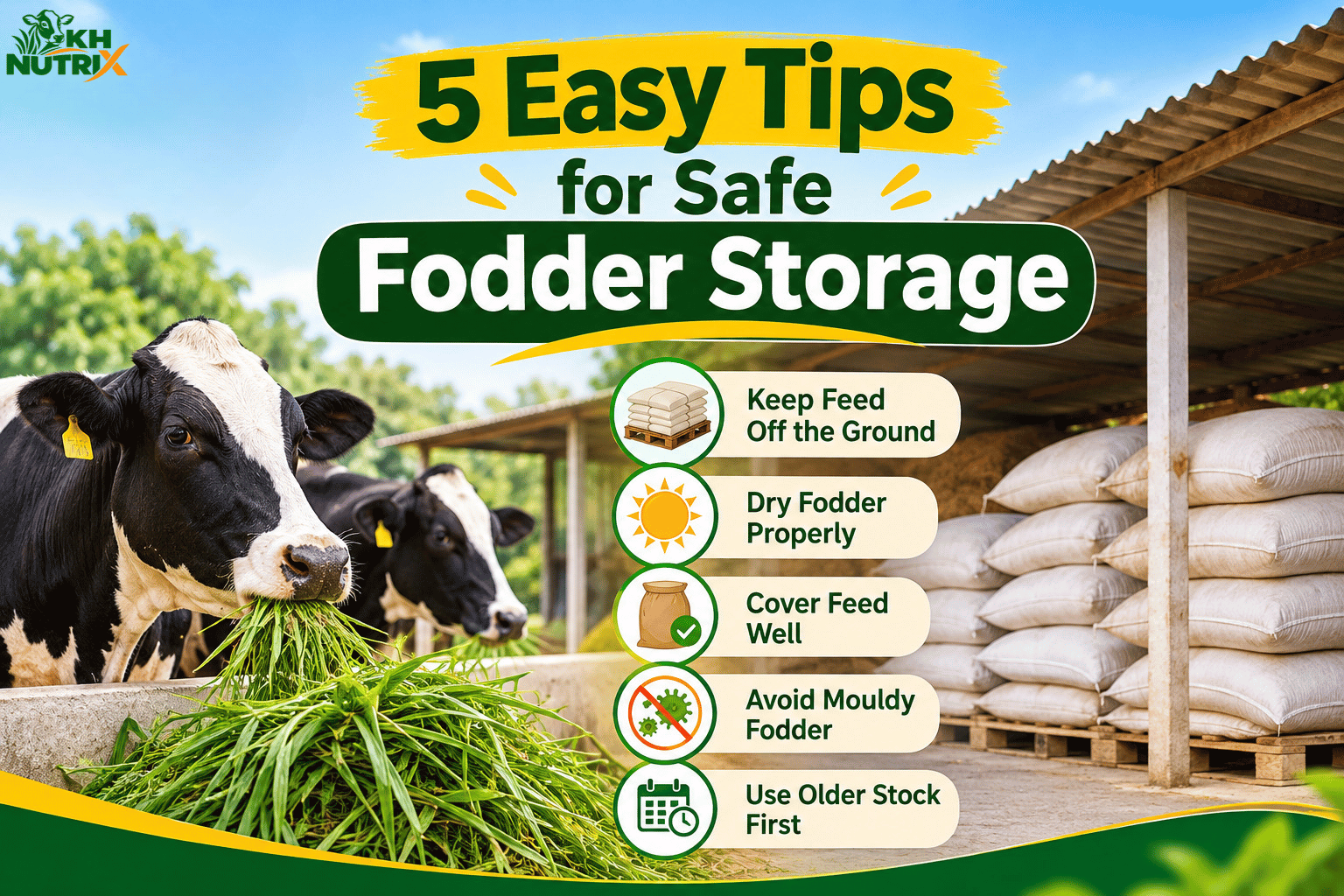
Storing animal feed properly is just as important as providing nutritious feed to livestock. During the rainy and winter seasons, moisture and dampness can become common problems in fodder storage areas. Excess moisture may encourage mould growth, spoil feed quality and make stored fodder unsafe for animals.
Farmers often store large quantities of dry fodder, hay, straw, green fodder and cattle feed for future use. However, improper storage can lead to unnecessary feed wastage and affect livestock health.
Whether you store dry fodder in bags or keep animal feed in bulk, a few simple precautions can help protect it from moisture and spoilage. Here are five practical ways to keep animal feed safe and maintain its quality.
1. Keep Feed Bags Off the Ground
One of the most common reasons for moisture damage is storing feed bags directly on the floor. Moisture from the ground can gradually reach the bags, especially in poorly ventilated storage areas.
To prevent this, keep fodder and feed bags on wooden pallets, raised platforms or dry wooden boards. This creates a gap between the floor and the feed, reducing the risk of moisture exposure.
Avoid placing bags directly against walls, as dampness can also spread from walls to stored feed. Leave some space between the bags and walls to allow proper air circulation.
Storage tip: Choose a covered area where rainwater cannot enter and where the roof does not leak.
2. Dry Fodder Properly Before Storage
If you are storing freshly harvested fodder, hay or crop residues, make sure they are sufficiently dried before storing them for a long time.
Fodder with excessive moisture can develop mould, unpleasant odours and spoilage. This may reduce its feeding quality and make it unsuitable for livestock.
Dry fodder should generally be stored at a safe moisture level appropriate for its type and storage method. For many dry hay and straw storage situations, moisture around 10–15% is a common guideline, although the ideal level can vary.
Never store wet or partially dried fodder in tightly packed piles for long periods. Allow it to dry properly before storage and check it regularly.
3. Keep Cattle Feed, Grain and Oil Cakes Covered
Concentrated feed, grains, oil cakes and other animal feed ingredients can also absorb moisture from the surrounding air.
Leaving feed bags open after use may expose the contents to humidity, insects and contamination. This is particularly concerning during rainy weather or when feed is stored in damp areas.
After taking out the required feed:
- Close the bag properly.
- Store feed in clean, dry containers with lids wherever practical.
- Keep feed away from water sources and damp floors.
- Maintain cleanliness in the storage area.
Properly closed containers and bags help reduce exposure to moisture, dust and pests.
4. Never Feed Mouldy Fodder to Animals
This is one of the most important precautions in livestock feed management.
Mouldy feed may contain harmful substances, including mycotoxins, which can affect animal health. Some contaminated feed may not show obvious signs of spoilage, so regular inspection is important.
Look for these warning signs:
- White, green or black mould spots.
- Unusual lumps or clumping in the feed.
- Sour, musty or unpleasant smell.
- Changes in colour or texture.
- Visible signs of dampness or spoilage.
If you notice mould or suspect contamination, separate the affected feed immediately and do not feed it to animals.
Important: Mouldy fodder should not be considered safe simply because it has been dried in the sun or the visibly spoiled portion has been removed. If contamination is suspected, seek advice from a veterinarian or livestock nutrition expert.
5. Use Older Stock First
When storing fodder and animal feed for several weeks or months, follow the first-in, first-out (FIFO) method.
This means using older stock before newly purchased or stored feed. Place older bags where they are easier to access and keep new stock behind them.
This practice helps reduce the chances of feed remaining unused for too long and becoming spoiled.
Check your stored feed regularly for dampness, insects, damaged bags, unusual smells and mould. Even feed stored in a dry place should be inspected before use.
Quick Checklist for Safe Fodder Storage
Farmers can follow these simple practices to reduce feed spoilage:
- Keep feed bags raised above the ground.
- Maintain a gap between bags and walls.
- Store fodder in a dry, covered and well-ventilated area.
- Dry fodder properly before long-term storage.
- Keep feed bags closed after every use.
- Store grains and cattle feed in clean, dry containers.
- Inspect stored feed regularly.
- Remove mouldy or spoiled feed from the storage area.
- Use older feed stock before newly stored stock.
Why Proper Animal Feed Storage Matters
Proper fodder storage helps farmers reduce feed wastage and maintain the quality of stored feed. Moisture control is particularly important because damp conditions can encourage mould growth and spoilage.
Clean and properly stored feed also supports better livestock feeding practices. Along with a balanced diet, fresh drinking water, proper hygiene and regular health monitoring, safe feed storage can contribute to healthier animals and better farm management.
Frequently Asked Questions (FAQs)
1. How can farmers protect animal feed from moisture?
Store animal feed in a dry, covered and well-ventilated area. Keep bags on raised platforms, away from damp floors and walls, and close them properly after use.
2. Why does fodder develop mould during storage?
Mould growth becomes more likely when fodder contains excess moisture and is stored in areas with poor ventilation. Wet fodder packed tightly can spoil more easily.
3. Can mouldy fodder be fed to cattle?
No. Mouldy fodder may contain harmful toxins that can affect animal health. It should not be mixed with healthy feed or fed to livestock.
4. What is the ideal moisture level for dry fodder?
A moisture level of around 10–15% is a general guideline for many dry fodder storage situations. However, the suitable moisture level depends on the type of fodder, storage conditions and intended storage duration.
5. How should cattle feed, grains and oil cakes be stored?
Keep them in clean, dry and properly closed bags or containers. Store them away from moisture, leaking roofs, damp floors and pests.
6. Should farmers use old fodder or new fodder first?
Use older fodder first, provided it is still in good condition. Check for mould, unusual smells, dampness and contamination before feeding it to animals.
Final Thoughts
Safe fodder storage is an important part of livestock care. Moisture, dampness and mould can damage stored feed and lead to unnecessary losses for farmers.
By keeping fodder off the ground, drying it properly, closing feed bags after use, checking for mould and using older stock first, farmers can take simple steps to protect their stored feed.
A little attention to storage conditions can help reduce feed wastage and ensure that animals receive clean and good-quality feed throughout the year.