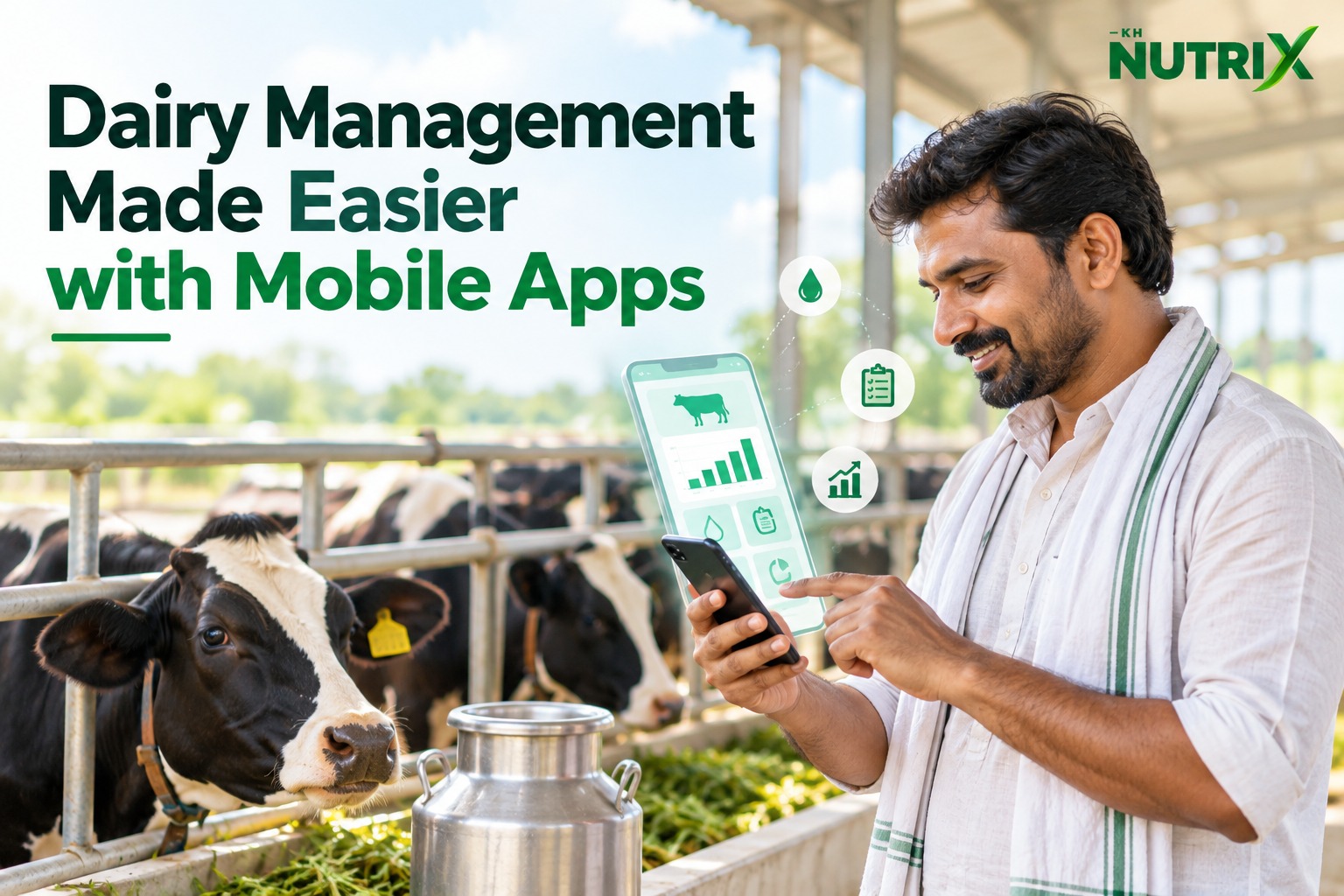
Dairy farming in India is changing as farmers find new ways to manage their work with the help of mobile technology. From checking important farm information to keeping track of daily activities, smartphones are becoming useful tools for dairy farmers and milk collection businesses.
Mobile apps for dairy management are digital tools that help farmers and dairy operators handle selected farm activities through a smartphone. Depending on the app, these activities may include maintaining milk records, organising farm information, tracking expenses, managing animal health details, and reviewing business performance.
Earlier, farmers often depended on their experience, handwritten notes, and information shared through phone calls or personal visits. These methods are still important, but mobile apps offer another way to organise information and access it when needed.
The change is not only about using technology. It is also about making everyday work easier to manage, reducing avoidable confusion, and helping farmers make decisions with better information.
How Are Mobile Apps Changing Dairy Management?
Mobile apps are changing dairy management by bringing useful digital tools closer to the people who need them. Farmers can use their phones to organise information, check saved records, and manage supported tasks without always depending on a computer or physical paperwork.
The impact depends on the type of app, the size of the dairy operation, and how consistently it is used. For some farmers, the main benefit is easier record keeping. For others, mobile technology can support communication, planning, expense monitoring, and access to animal-related information.
Here are the main ways mobile apps are influencing everyday dairy operations.
1. Farmers Can Access Important Information While Working
Dairy work does not happen at a desk. Farmers may spend their day in cattle sheds, arranging feed, monitoring animals, collecting milk, purchasing supplies, or coordinating with milk buyers.
When important information is available through a mobile app, farmers may be able to check relevant details while carrying out these activities.
For example, a farmer who wants to review an earlier milk entry or check a saved transaction may be able to find the information on their phone, depending on the app's features.
This can make routine work more convenient because farmers do not always have to wait until they return to an office or storage area to look through their records.
The key is to choose a mobile app that is easy to navigate and works well for the tasks performed most often.
2. Daily Dairy Activities Become Easier to Organise
A dairy farm involves several activities that need regular attention. Feeding, cleaning, milking, equipment maintenance, and arranging supplies are all part of the routine. Larger farms may also need to coordinate workers and manage several groups of animals.
Mobile technology can help farmers organise selected tasks through digital schedules, notes, reminders, or task-management tools where these features are available.
For instance, a farmer may use a supported reminder feature to keep track of an upcoming veterinary appointment or an important farm-related task.
However, an app is only useful when the information entered into it is accurate and kept up to date. Digital tools can support a routine, but they do not replace proper animal care or the farmer's judgment.
3. Better Access to Milk Production Information
Milk production can change from one day to another. Factors such as an animal's health, stage of lactation, feeding routine, and environmental conditions may affect output.
Keeping track of these changes can help farmers understand what is happening on their farms. A suitable dairy farming app may allow users to record production figures and review earlier entries.
For example, if a farmer notices that milk output has fallen over several days, production records can help establish when the change began. The farmer can then assess the situation and seek veterinary advice when needed.
Production records alone cannot explain every change, but they provide useful information for further investigation.
When evaluating a dairy app, check whether it supports the type of production tracking your farm requires and whether the information can be reviewed over a selected period.
4. Milk Collection Businesses Can Coordinate Work More Efficiently
Mobile apps can also be useful beyond individual dairy farms. Milk collection centres and dairy businesses often work with several suppliers and handle transactions throughout the day.
A suitable milk collection app may help authorised users access collection-related information, review supplier details, and coordinate their work more easily.
For example, a collection operator may need to verify a previous entry or review information associated with a supplier. Having organised digital records can make this process more convenient, depending on the system being used.
Mobile tools may also help businesses reduce repeated data entry when the app supports the required workflow. However, users should still check entries for mistakes and follow the business's normal verification process.
For dairy businesses handling increasing volumes of milk, the ability to access relevant information quickly can make daily coordination easier.
5. Farmers Can Keep a Closer Eye on Expenses
Feed, labour, veterinary services, medicines, electricity, and equipment maintenance can all contribute to the cost of running a dairy farm.
When these expenses are not recorded consistently, it can be difficult to understand where the money is going. Mobile apps with expense-tracking features can help farmers maintain a clearer record of their spending.
For example, a farmer might record feed purchases throughout the month and review the total at the end of the period. Comparing these expenses with milk income can provide a starting point for understanding business performance.
The results depend on entering complete and accurate information. If some costs are missing, the figures may not represent the farm's actual financial position.
Farmers looking for dairy farm management software should therefore check whether expense recording and financial reporting are included, rather than assuming every app offers them.
6. Animal Health Information Can Be Easier to Find
Animal health is one of the most important parts of dairy farming. Vaccinations, veterinary consultations, medicines, treatment history, and breeding-related activities may all need attention at different times.
Some livestock management apps allow farmers to maintain individual animal profiles and store health-related information. Certain platforms may also offer reminders for scheduled activities.
These records can be useful when a farmer needs to review an earlier treatment or provide a veterinarian with relevant details.
Not every dairy management app includes animal health tools, and a reminder does not replace professional veterinary guidance. Farmers should select a solution that matches their requirements and continue following appropriate animal health practices.
7. Communication Between Farmers and Dairy Businesses Can Improve
Dairy operations often depend on coordination between farmers, milk collection centres, transporters, suppliers, veterinarians, and buyers.
Mobile technology gives people additional ways to communicate, share information, and confirm arrangements. Depending on the tools used, messages, digital documents, and transaction details can be shared without requiring every discussion to happen in person.
For example, a farmer may use a messaging app to confirm a collection schedule, while a dairy business may use digital records to check relevant transaction details.
Communication apps and dairy management apps serve different purposes, though. A messaging service may help people communicate, while dedicated dairy software may organise business information. Some businesses use both to support their daily operations.
Clear communication remains important, particularly when a change affects milk collection timings, payment arrangements, or the handling of animals.
8. Digital Records Can Help Farmers Make More Informed Decisions
Good decisions depend on having useful information at the right time. Experience remains valuable in dairy farming, but organised records can help farmers understand patterns that may be difficult to notice from memory alone.
For example, production records may show changes over time, expense records can reveal rising costs, and collection information can help a business review its supply patterns.
Some mobile apps turn saved information into summaries, charts, or reports. These features can make it easier to compare figures and identify areas that need attention.
However, digital information should be reviewed in context. A change in milk production, for instance, may have several possible causes. Records can help identify the issue, but they do not automatically provide the correct solution.
The best results come from combining reliable records with practical experience and professional advice when required.
9. Mobile Technology Can Support Dairy Farmers in Rural Areas
Many dairy farmers in India work in rural areas where access to computers or office-based systems may be limited. A smartphone can provide a more convenient starting point for adopting digital tools.
A mobile app may help a farmer access supported services without investing in a separate computer. However, the usefulness of the app also depends on internet connectivity, phone compatibility, language, and the user's comfort with digital technology.
Before adopting an app, farmers should check whether it works reliably in their area, whether its interface is easy to understand, and whether it supports their preferred language.
If internet access is inconsistent, offline functionality is especially important to verify. Some apps allow certain activities without an active connection, while others require internet access for most functions.
Affordable access and ease of use are important factors in making digital dairy management practical for more farmers.
10. Dairy Management Apps Are Making Digital Adoption More Practical
As mobile technology becomes a regular part of everyday life, more dairy businesses can explore digital ways to organise their work.
A dairy management app may bring selected activities into one system, reducing the need to switch between multiple tools. The available functions vary, so farmers should focus on the features that solve their actual problems.
For example, a milk collection business may prioritise supplier records and collection information, while an individual farmer may be more interested in production figures and expenses.
A useful app should fit into the existing routine instead of making simple tasks unnecessarily complicated. Farmers can start with the most important requirements and expand their use of digital tools as their needs change.
How KH Nutrix Fits into the Shift Towards Digital Dairy Management
The growing use of mobile technology is creating new opportunities for dairy businesses to organise their work and access important information more conveniently.
KH Nutrix is a dairy and animal feed business under KH24 Agro Venture Pvt. Ltd. Its app is being developed with dairy management in mind, including mobile-based management of milk-related records.
For farmers and dairy businesses exploring digital solutions, KH Nutrix is one option to consider when evaluating ways to organise dairy-related information through a phone. As with any developing application, users should check the features currently available and confirm that they meet their specific needs.
The wider value of digital dairy management lies in making everyday information easier to record, access, and review. The right tool should support the farmer's working routine rather than add unnecessary complexity.
Frequently Asked Questions
1. How are mobile apps changing dairy management?
Mobile apps help farmers organise dairy records, access information, and manage daily activities using a smartphone.
2. What is a dairy management app?
It is a mobile application that helps manage dairy-related tasks such as milk records, expenses, and animal information.
3. Can dairy farmers manage their farm using a smartphone?
Yes, farmers can manage supported dairy activities through a suitable mobile app.
4. Are mobile apps useful for small dairy farms?
Yes, they can help small farms organise records and access important information more easily.
5. Do dairy management apps work without the internet?
Some apps offer offline access, while others require an internet connection.
6. How can mobile apps help milk collection centres?
They can help organise supplier details, milk collection records, and transaction information.
7. What should farmers look for in a dairy farming app?
Farmers should check its features, ease of use, data security, cost, and internet requirements.
8. Is KH Nutrix a dairy management app?
KH Nutrix is developing an app for dairy management, including mobile-based management of milk-related records.
Conclusion
Mobile technology is changing dairy management by giving farmers and dairy businesses another way to organise information, coordinate daily activities, and review their work. From production records and expense tracking to animal information and business reports, suitable apps can support several parts of dairy operations.
However, technology works best when it addresses a genuine need. Farmers should choose tools that are easy to use, protect important information, and fit the way their dairy business operates.
For those exploring digital dairy management, options such as the KH Nutrix app are worth evaluating for their supported milk-record management features. Starting with a clear requirement and using the app consistently can make the transition to digital tools more manageable.
Ultimately, mobile apps do not replace the knowledge and experience needed to run a dairy farm. They can help farmers put that knowledge to better use by making relevant information easier to access and review.