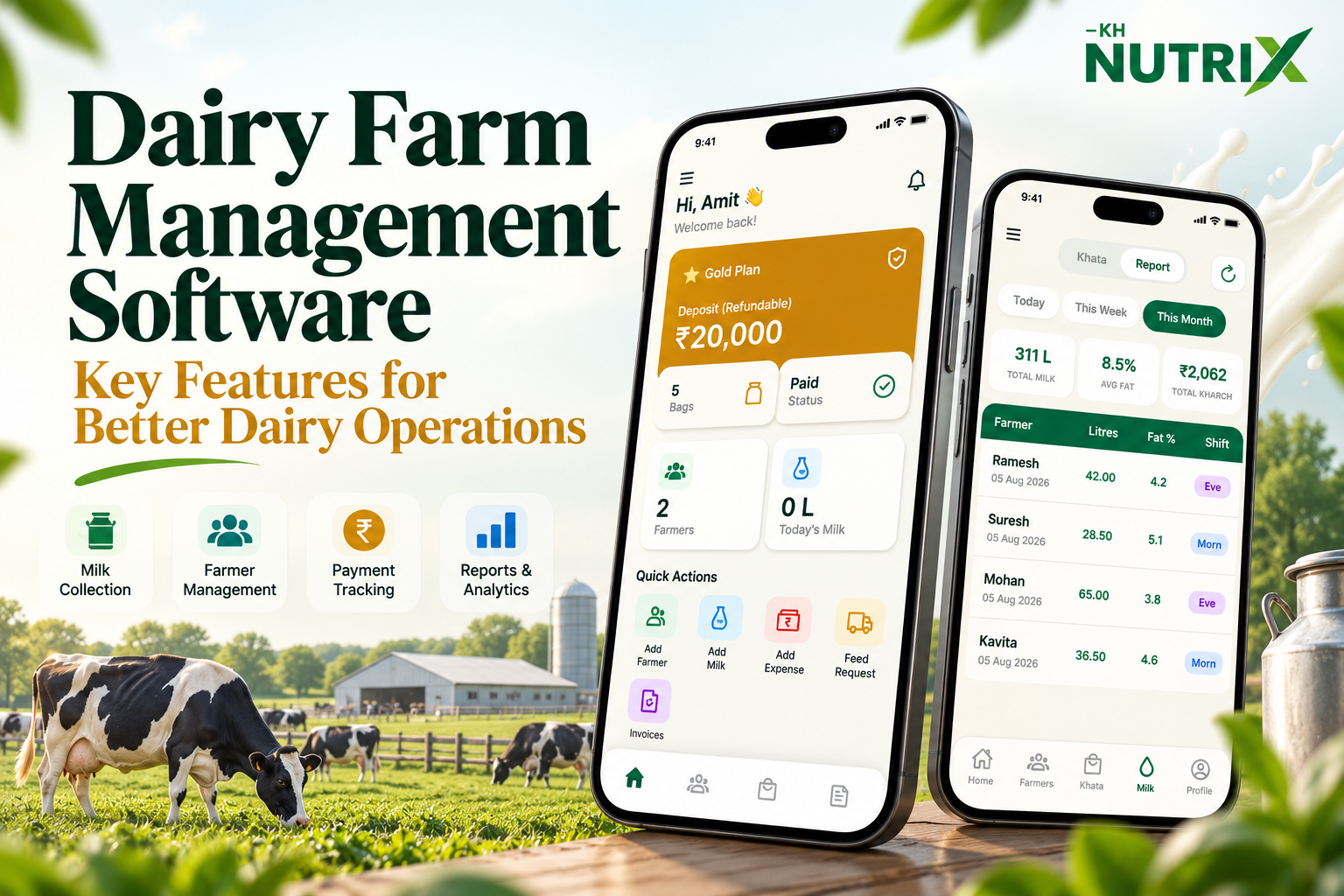
Dairy farming involves much more than feeding cattle and collecting milk. Farmers and dairy business owners also need to manage milk production, maintain farmer and animal records, calculate payments, monitor expenses, and review daily performance. When these activities are handled through separate notebooks and spreadsheets, it can become difficult to keep information organised as the business grows.
Dairy farm management software is a digital tool that helps farmers and dairy businesses organise important farm activities, maintain records, and review business information in one place. Depending on the software, it may include features for milk collection, farmer management, payment records, expense tracking, animal health, and performance reports. Some solutions also allow users to manage selected records through a mobile phone.
Choosing the right system can help dairy farmers spend less time managing paperwork and more time looking after their animals and business. Understanding the essential features makes it easier to select software that suits the size and needs of a dairy operation.
Why Is Dairy Farm Management Software Important?
Managing a small dairy farm may seem straightforward when the number of animals and daily transactions is limited. However, as milk production increases or more farmers become involved in a collection business, the amount of information that needs to be recorded also grows.
For example, a dairy operator may need to check how much milk was collected from different farmers, review the rate applied to each entry, calculate payments, and identify outstanding amounts. Finding this information in multiple registers can take time.
It provides a more organised way to handle these activities. It can help users maintain consistent records, find past information more easily, and understand how different parts of the business are performing.
The purpose is not simply to replace paper with a screen. It is to make everyday dairy work easier to record, review, and manage.
Essential Features of Dairy Farm Management Software
The right features depend on whether the system is being used by an individual dairy farmer, a milk collection centre, or a larger dairy business. The following are important features to consider.
1. Milk Production and Collection Management
Milk production and collection records are central to many dairy operations. A useful system should make it easy to enter milk quantities, identify the date of collection, and connect each entry with the relevant farmer or animal, depending on the business model.
For a milk collection centre, records may include the farmer's name or ID, milk quantity, collection shift, and applicable rate. For an individual dairy farm, the focus may be on the quantity produced by the animals and changes in production over time.
Organised entries help users review daily totals and compare records across different days. They can also make it easier to investigate an unusual change in the amount of milk collected or produced.
When selecting dairy management software, check whether the milk entry process is simple enough to use during busy morning and evening collection periods.
2. Farmer and Supplier Record Management
Dairy collection businesses often work with multiple farmers who supply milk regularly. Keeping every supplier's details in separate registers can make it harder to find information when needed.
Farmer management features help maintain basic details such as names, contact information, identification numbers, and relevant supply records. Where supported, the system may also connect each farmer's profile with their collection history and payment information.
For example, if a dairy operator wants to review a particular farmer's milk supply for the previous month, organised digital records can make the information easier to locate.
A well-maintained farmer database also helps reduce confusion between people with similar names and makes routine record checks more convenient.
3. Milk Quality and Testing Records
Milk quality is an important part of dairy collection and pricing. Depending on the type of business, quality records may include FAT, SNF, and other measurements obtained through the applicable testing process.
FAT refers to milk fat content, while SNF means solids-not-fat. These measurements can be used alongside quantity and the relevant pricing method when determining the value of milk supplied.
Dairy management software may allow users to store quality readings with individual collection entries. Some systems also support connections with milk testing equipment, but this capability should be checked before choosing a platform.
Keeping quality information organised can help businesses review past readings, compare results, and maintain clearer records for discussions about milk quality and pricing.
4. Milk Rate and Payment Management
Accurate payment records are important for maintaining trust between milk suppliers and dairy businesses. Payment calculations may depend on milk quantity, quality measurements, the agreed rate, and any applicable adjustments.
Software with payment management features can help users organise these details and review how the payable amount was calculated. Depending on the system, users may also be able to maintain payment histories, record completed payments, and identify outstanding balances.
Consider a simple example: a farmer supplies 15 litres of milk at an agreed rate of ₹40 per litre. The basic milk value is ₹600 before any applicable adjustments.
When quantity, rate, and payment details are recorded properly, it becomes easier to check the calculation later rather than relying on memory.
Before choosing software, check whether it supports your dairy's payment method and rate calculation process.
5. Expense Tracking and Cost Management
Milk sales alone do not show the full financial picture of a dairy business. Farmers also spend money on cattle feed, veterinary care, medicines, labour, equipment maintenance, transportation, and other daily requirements.
Expense tracking helps record these costs with dates, categories, and amounts. Over time, the information can provide a clearer view of where money is being spent.
For example, a farmer may compare monthly feed expenses with milk revenue to understand whether operating costs have increased. Such a comparison does not automatically reveal profit, but it provides useful information for further analysis.
Look for a system that makes expense entry straightforward and allows users to review records for a selected period. If profit and loss reports are required, confirm that the software supports them and accounts for the relevant income and expenses.
6. Animal Health and Treatment Records
Animal health affects the day-to-day work of a dairy farm. Vaccinations, veterinary visits, treatment dates, breeding activities, and other important events may need to be recorded for individual animals.
Software designed for livestock management may include animal profiles where farmers can store identification details, health history, and treatment information. Some platforms may also offer reminders for scheduled activities.
These records can help farmers remember previous treatments and share relevant information with a veterinary professional when needed.
However, not every dairy management application includes animal health management. If maintaining individual cattle records is important to your farm, check that this feature is available rather than assuming every dairy software solution supports it.
7. Inventory and Feed Management
Feed, medicines, and other supplies are regular expenses for many dairy farms. Running out of an essential item at the wrong time can disrupt routine work, while buying more than necessary may tie up money in unused stock.
Inventory management features help businesses record purchased items, quantities used, and the stock remaining. Depending on the software, users may also be able to organise supplier details and review purchase history.
For dairy farms that prepare feed or manage several categories of supplies, these records can make stock checks more systematic.
The most suitable inventory feature will depend on the farm's requirements. A small operation may need only basic stock records, while a larger dairy business may require more detailed purchase and usage reports.
8. Reports and Performance Analysis
Daily records become more useful when they can be reviewed over time. Reporting features help dairy operators summarise information and identify changes that may otherwise be difficult to notice.
Depending on the software, reports may cover milk production, collection quantities, payment history, expenses, animal performance, or inventory.
A farmer might compare weekly milk production to see whether output has changed. A collection centre may review monthly supply figures to understand collection patterns. An expense report can help identify categories where costs have risen.
Reports do not replace careful farm management, but they provide information that supports better decisions.
Before selecting a system, check which reports it offers, whether the information can be filtered by date, and whether reports can be downloaded or shared when needed.
9. Mobile Access for Managing Dairy Records
Farmers and collection staff are not always sitting at a desk. They may be working in cattle sheds, visiting collection points, buying supplies, or handling other farm activities throughout the day.
A dairy management app can make it possible to enter or review supported records directly from a mobile phone. Instead of waiting until the end of the day to update a register, users may be able to record information closer to the time the activity takes place.
For example, a dairy farmer can use a suitable mobile application to maintain milk-related entries and check previously saved information, provided those functions are supported by the app.
When evaluating a mobile solution, check how easy it is to use, whether the text and fields are clear, and whether it works reliably in the conditions where the farm operates. If internet connectivity is inconsistent, confirm whether the app supports offline entry and how data is synchronised later.
10. Data Security, Backup, and Easy Record Retrieval
Dairy records may contain business information, farmer details, transaction histories, and financial data. Losing these records can create unnecessary work and make it difficult to verify earlier entries.
When choosing dairy farm management software, review how the provider handles access permissions, data storage, backup, and account security. Check whether users can recover their information if a phone is lost or replaced.
It is also worth understanding how records can be exported, whether multiple authorised users can access the system, and what happens if the subscription or service ends.
A simple interface is useful, but reliable access to important records matters just as much. Farmers should understand where their information is stored and how they can retrieve it when required.
How to Choose the Right Dairy Farm Management Software
Not every dairy business needs the same set of features. An individual farmer may mainly want to organise milk production and expenses, while a collection centre may need farmer-wise entries, quality testing, rate calculations, and payment records.
Before selecting software, consider the following questions:
- What do you need to manage? Identify whether your priority is milk collection, animal records, expenses, payments, inventory, or several activities together.
- Can you use it on your phone? Check whether the mobile version supports the tasks you perform regularly.
- Is it easy to learn? The system should be practical for the people who will enter and review the information.
- Does it support your workflow? Confirm that its fields, reports, and payment methods match your existing dairy operations.
- How is your data protected? Review access controls, backup arrangements, and options for retrieving records.
- What will it cost? Compare subscription fees, setup charges, support, and any additional costs before making a decision.
It is often sensible to start with the features you genuinely need instead of paying for a large set of tools that your business may never use.
How KH Nutrix Fits into Digital Dairy Management
As dairy businesses become more organised, mobile technology offers a practical way to maintain important records without depending entirely on paper-based methods.
KH Nutrix is a dairy and animal feed business under KH24 Agro Venture Pvt. Ltd. Its app is being developed with dairy management in mind, including the ability to manage milk-related records through a phone.
For dairy farmers and businesses looking to move towards digital record keeping, a mobile app can be a useful option for keeping relevant information accessible and organised. The important consideration is to check which features are currently available in the app and whether they match the user's daily requirements.
The aim of digital dairy management is straightforward: make routine information easier to record, find, and review. A suitable app can support this process without requiring farmers to change every part of their working method at once.
Common Mistakes to Avoid When Using Dairy Management Software
Even useful software depends on accurate information. A few simple practices can help keep dairy records reliable.
Entering information late: Recording details close to the time of collection or expense can reduce the chance of forgetting important information.
Using inconsistent names or IDs: Keep farmer and animal identification details consistent so records can be found and compared correctly.
Ignoring incorrect entries: Review unusual quantities, rates, or amounts and correct mistakes using the system's available process.
Not checking reports: Reviewing records regularly can help identify missing entries and unexpected changes.
Assuming every feature is included: Check the software's actual capabilities, especially for animal health, automatic calculations, offline access, and payment processing.
Neglecting backups and account security: Follow the provider's recommendations for protecting access and keeping important information recoverable.
Frequently Asked Questions
What is dairy farm management software?
Dairy farm management software is a digital system used to organise activities such as milk production, collection, farmer records, expenses, animal information, and business reporting. Available features vary by platform.
Which features are most important in dairy management software?
The most useful features depend on the operation. Milk records, farmer or animal profiles, expense tracking, payment management, reports, and mobile access are common areas to consider when comparing solutions.
Can dairy farmers manage records using a mobile phone?
Yes. A dairy management app can allow farmers to enter or review supported information on a phone. The available functions depend on the app, and users should check whether offline access is supported if internet connectivity is limited.
Is dairy management software useful for small dairy farms?
It can be useful for small farms that want to organise records and review expenses or production more easily. The best option is one that is simple to use and suited to the farm's actual needs.
Does dairy management software include cattle health records?
Some platforms include animal profiles, treatment history, vaccination schedules, or breeding records. Others focus mainly on milk collection and business transactions, so these features should be verified before choosing a system.
How does dairy management software help with payments?
Software with payment management features can organise milk quantities, applicable rates, payment calculations, and transaction histories. The exact calculations and payment options depend on the system and the dairy's process.
What should farmers check before choosing a dairy management app?
Farmers should check ease of use, supported features, mobile compatibility, data security, backup arrangements, report options, customer support, and the total cost.
Conclusion
Efficient dairy operations depend on accurate records, regular monitoring, and a clear understanding of daily costs and activities. Dairy farm management software can bring these tasks into a more organised process, from milk collection and payment records to expenses, animal information, and performance reports.
The right solution does not have to be complicated. Start by identifying the records that take the most time to manage, then choose software that addresses those needs and is practical for everyday use.
For farmers exploring digital record keeping, mobile options such as the KH Nutrix app are worth considering for supported dairy management activities. Checking the available features before getting started can help ensure that the chosen tool fits the farm's actual workflow.
In the long run, consistent records and regular reviews can help dairy farmers manage daily work with greater clarity and make more informed decisions for their business.