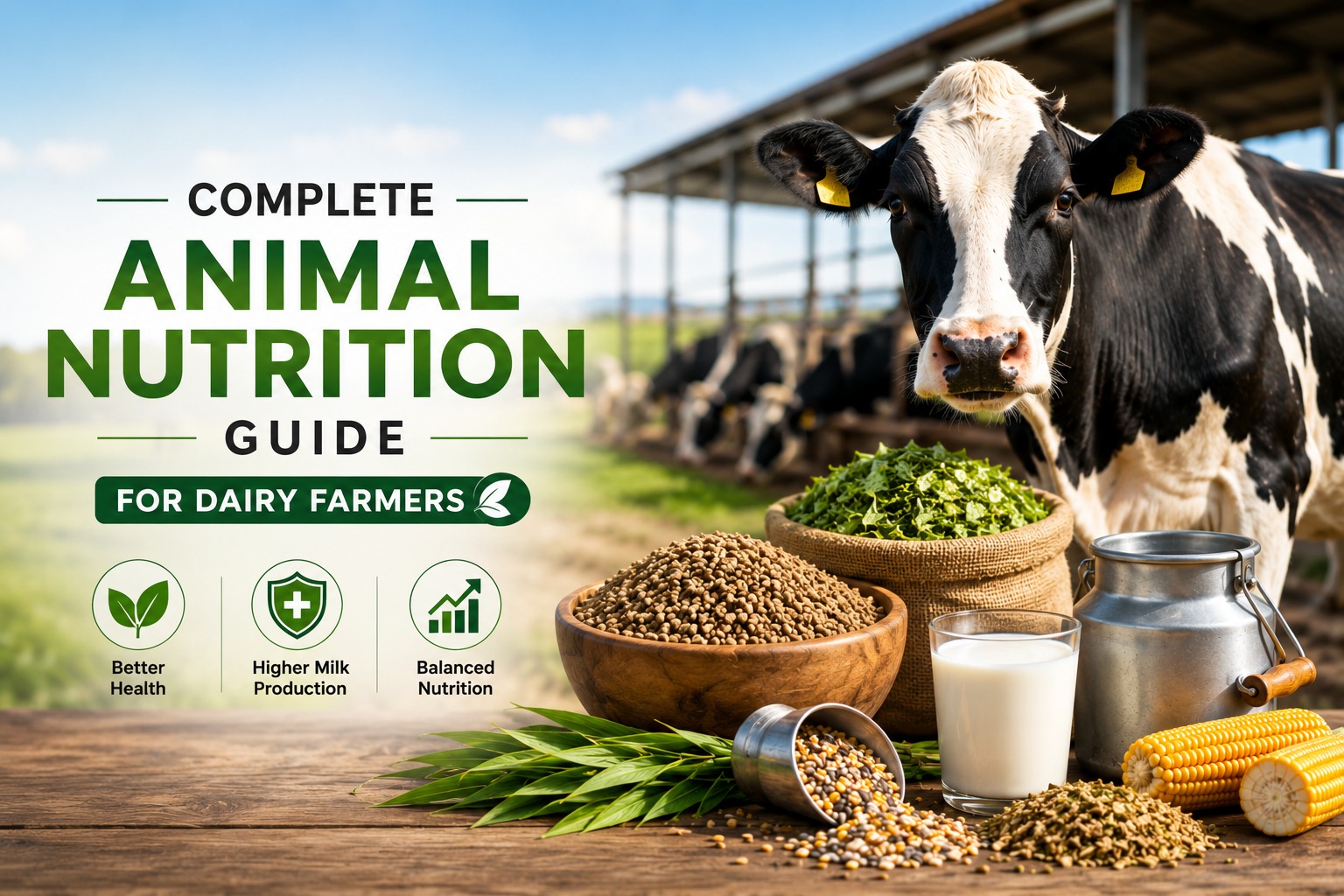
Complete Animal Nutrition Guide for Dairy Farmers
Proper nutrition is the foundation of successful dairy farming. Healthy animals produce more milk, reproduce efficiently, resist diseases better, and remain productive for a longer period. Understanding animal nutrition helps farmers maximize productivity while reducing unnecessary feeding costs.
What is Animal Nutrition?
Animal nutrition refers to supplying the right quantity and balance of nutrients that cattle need for maintenance, growth, reproduction, and milk production.
Essential Nutrients Required by Dairy Cattle
Carbohydrates
Carbohydrates provide energy for daily activities and milk production. They mainly come from grains and fodder.
Proteins
Protein supports muscle development, body repair, growth, and milk synthesis. Oil cakes, soybean meal, and quality cattle feed are excellent protein sources.
Fats
Fats provide concentrated energy and improve body condition, especially during early lactation.
Vitamins
Vitamins support immunity, metabolism, vision, and reproductive performance. Vitamin A, D, and E are particularly important for dairy cattle.
Minerals
Calcium, phosphorus, magnesium, zinc, copper, and selenium are essential for strong bones, better fertility, and higher milk production.
Fiber
Fiber maintains healthy rumen function and improves digestion. Green fodder and dry roughage are important fiber sources.
Water
Clean drinking water is the most important nutrient. Dairy cows require large quantities of water every day for optimum milk production.
Balanced Feeding Program
A balanced feeding program should include:
- Green fodder
- Dry fodder
- Concentrate feed
- Mineral mixture
- Salt
- Fresh drinking water
Nutrition During Different Stages
Calves
Provide colostrum immediately after birth and gradually introduce calf starter feed and quality roughage.
Growing Heifers
Focus on balanced nutrition for proper growth without excessive fat deposition.
Lactating Cows
Increase energy and protein intake to support higher milk production.
Pregnant Animals
Provide additional minerals and vitamins during late pregnancy for healthy calves and easier calving.
Common Feeding Mistakes
- Feeding poor-quality fodder
- Sudden changes in diet
- Insufficient clean water
- Ignoring mineral supplementation
- Overfeeding concentrates
- Poor feed storage
Benefits of Proper Animal Nutrition
- Higher milk production
- Better reproductive performance
- Strong immunity
- Healthy digestion
- Reduced disease incidence
- Faster growth
- Improved milk quality
- Increased farm profitability