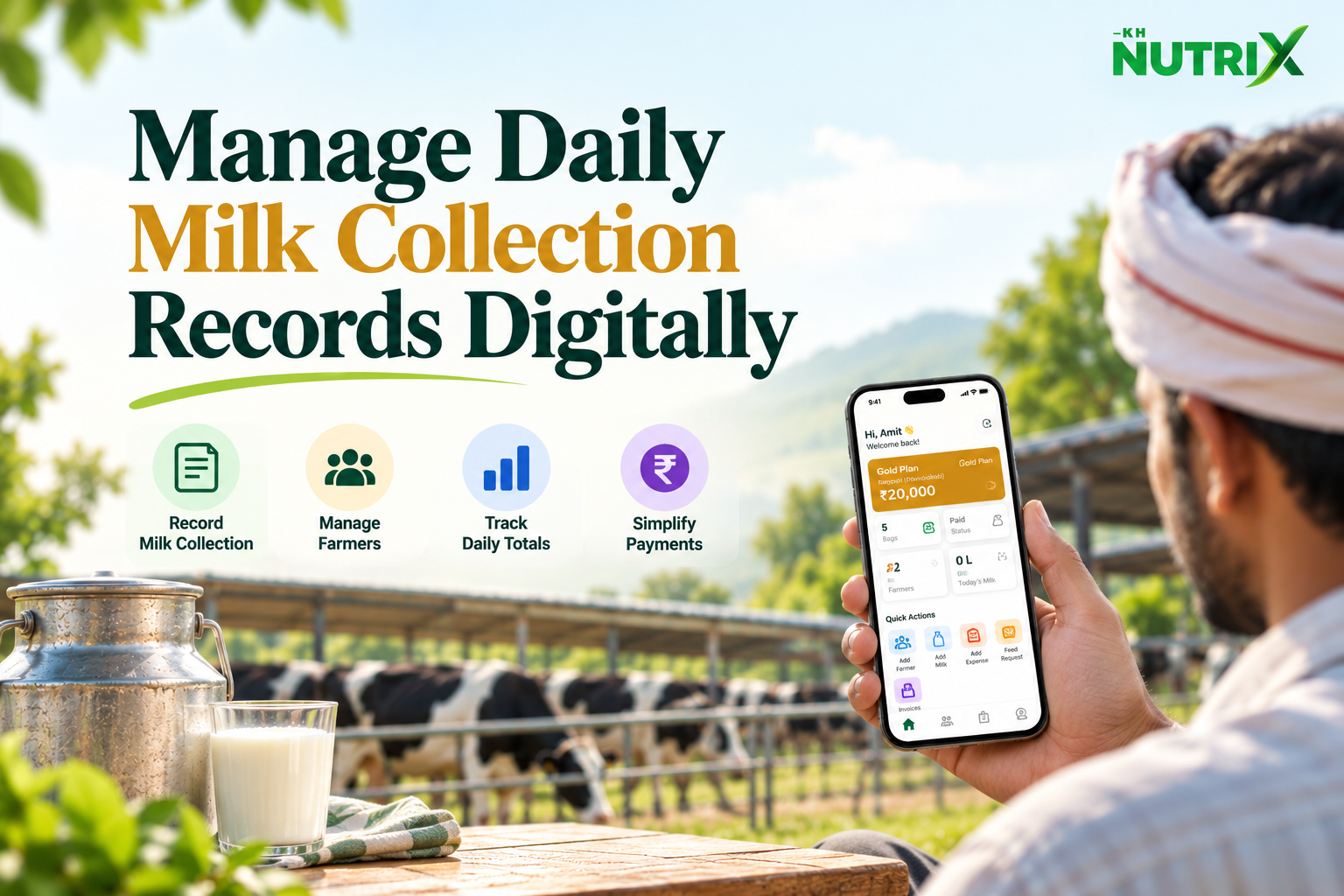
Daily milk collection records are digital or written records used to track the quantity of milk collected from each farmer, collection time, milk rate, and quality details such as FAT and SNF. Maintaining these records digitally through a milk collection record management app helps dairy businesses organise daily entries, reduce manual errors, and manage farmer-wise milk payments more efficiently.
A missed entry or an incorrect quantity can also create confusion when checking daily collection totals. For dairy farmers and milk collection operators, maintaining accurate records is important for keeping everyday work organised.
One practical alternative is to maintain milk collection records digitally using a mobile phone. With a suitable milk collection app, users can record daily entries, organise farmer-wise information and review previous records without relying entirely on a paper register.
This guide explains how to maintain daily milk collection records digitally, what information to record and how mobile-based record-keeping can make the process easier.
Why Is It Difficult to Maintain Milk Collection Records Manually?
A paper register may work well when only a few transactions take place each day. However, as milk collection grows, maintaining every entry correctly can become challenging.
Some common difficulties include:
Managing multiple farmers: Each farmer may supply a different quantity of milk, making individual records important.
Recording morning and evening collections: Separate collection entries need to be maintained without mixing up the quantities.
Avoiding missed entries: During busy collection hours, writing down every transaction can be difficult.
Finding previous records: Checking an older milk collection entry may require going through several pages.
Calculating daily totals: Adding quantities from multiple entries takes time, particularly when records are spread across different pages.
Keeping registers safe: Paper records can be damaged, misplaced or become difficult to read over time.
These problems do not mean that paper registers cannot work. They simply show why dairy businesses may need a more convenient way to organise their records as daily operations become busier.
What Information Should Be Included in a Daily Milk Collection Record?
Before switching to digital record-keeping, it helps to understand which details need to be recorded consistently.
A useful milk collection record may include the following information:
| Record Detail | Purpose |
| Farmer Name or ID | Identifies the farmer supplying the milk. |
| Collection Date | Records the date of milk collection. |
| Collection Time or Shift | Separates morning and evening collections. |
| Milk Quantity | Records the quantity of milk collected in litres. |
| Milk Type | Identifies cow milk, buffalo milk or other categories. |
| Milk Rate | Helps calculate the milk value based on the applicable rate. |
| FAT/SNF Details | Records milk quality measurements when required. |
| Remarks | Notes any adjustments or unusual entries. |
Not every dairy business needs all these fields. A small collection operation may only need the farmer's name, date, quantity and collection shift. Businesses that purchase milk based on quality measurements may need additional details.
The important thing is to decide which information your business requires and record it consistently.
How to Maintain Daily Milk Collection Records Without a Paper Register
Moving to digital records does not need to be complicated. The process becomes easier when you follow a consistent routine.
1. Create a Record for Every Farmer
Start by organising the farmers who supply milk to your collection point. Each farmer should have a clear name or unique identification number so that their entries can be distinguished from others.
For example, if two farmers have similar names, using a unique farmer ID can help prevent confusion.
Keeping farmer details organised also makes it easier to review an individual's collection history instead of searching through a general register.
2. Record Milk Quantity at the Time of Collection
Enter the milk quantity as soon as it is measured. Delaying entries until the end of the day increases the chances of forgetting a transaction or recording the wrong figure.
For example, suppose three farmers supply the following quantities during the morning collection:
| Farmer | Milk Quantity |
| Farmer A | 12 litres |
| Farmer B | 18 litres |
| Farmer C | 15 litres |
| Total Collection | 45 litres |
Recording each entry immediately creates a clear record of the collection. The same process can be followed for the evening shift.
The figures above are only an example. Actual quantities will depend on the milk supplied by each farmer.
3. Keep Morning and Evening Entries Separate
Many dairy businesses collect milk twice a day. Combining both collections into one entry can make it harder to check the quantity received during each shift.
Maintain separate entries for morning and evening collections, even when they belong to the same farmer.
This makes it easier to answer questions such as:
- How much milk did a farmer supply in the morning?
- What was the evening collection quantity?
- What was the total quantity supplied during the day?
If your milk collection app supports shift-wise entries, use the available fields to maintain this separation.
4. Use a Mobile App for Digital Milk Collection Records
A mobile phone can be a convenient alternative to carrying and updating a paper register throughout the day.
A suitable milk collection app can help users enter collection details, organise records and review information through a digital interface. Depending on the app, records may be searchable by farmer, date or collection period.
For example, instead of looking through several register pages to check Monday's collection for a particular farmer, you may be able to locate the relevant digital entry through the app's available search or record-viewing options.
Before choosing an app, check whether it supports the fields and collection process your business uses. Also confirm whether it works without an internet connection if your collection location has unreliable connectivity.
5. Check Daily Collection Totals Before Closing
At the end of each collection shift or day, review the recorded quantities.
Compare the total shown in your records with the actual collection summary. If a figure appears incorrect, check the original measurement and correct the entry using the app's supported editing process.
For instance, if the morning collection total is 180 litres but your physical collection summary shows 185 litres, investigate the difference rather than carrying the discrepancy into the next day's records.
Regular checking helps identify missing or incorrect entries while the details are still easy to verify.
6. Review Records Regularly
Digital entries become more useful when they are reviewed consistently.
At the end of the day, check whether all farmers' collections have been recorded. At the end of the week or month, review the available summaries to understand the recorded collection activity.
If your app supports reports, use them to review the relevant information instead of calculating every total from scratch.
Remember that reports are only as reliable as the data entered into the system. Regular checks remain important, even when records are maintained digitally.
Can You Maintain Milk Collection Records on Your Phone?
Yes. You can maintain daily milk collection records on a smartphone by using a suitable milk collection or dairy management app.
Depending on the app's features, you may be able to:
- Enter milk quantities for individual farmers.
- Record collection dates and shifts.
- Review previous milk collection entries.
- Check daily or periodic collection summaries.
- Keep related farmer and transaction information organised.
Some applications also provide payment tracking, billing and report-generation features. These should be checked separately because not every milk collection app offers the same functions.
For farmers who manage their own milk supply records, a mobile app can provide a convenient way to keep track of daily quantities. For collection centres that receive milk from many farmers, it can help organise a larger number of entries.
How KH Nutrix Can Help With Digital Dairy Record-Keeping
For dairy farmers and milk collection operators looking for a mobile-based way to manage daily activities, KH Nutrix is a dairy management app focused on milk collection and related business records.
The app is intended to support a more organised approach to dairy management, allowing users to manage relevant information through their phones rather than depending entirely on handwritten records.
For example, digital milk collection records can help users keep daily entries organised and make it easier to review information when needed. Depending on the available app features, related activities such as payment records, invoices and business reports may also form part of the digital workflow.
This approach can be useful for collection operators who handle regular transactions and want a more convenient way to manage their records.
Before using KH Nutrix for a specific task, check the currently available features and supported entry options. The best digital solution is one that matches your collection routine and the information you need to maintain.
Is a Digital Milk Collection Record Better Than a Paper Register?
The answer depends on the size of your operation and how you manage daily transactions.
A paper register is simple to use and does not require a smartphone or an app. However, searching for old entries, calculating totals and keeping multiple records organised can take additional time.
Digital records can make information easier to search, review and organise when the selected app provides the necessary functions. They can also reduce dependence on physical registers.
However, digital records need proper management too. Users should check entries for accuracy, understand how data is backed up and protect access to their phones and accounts.
For a small operation with very few transactions, a register may be sufficient. For a growing dairy business with frequent collections and many farmers, digital record-keeping may offer a more convenient long-term approach.
Common Mistakes to Avoid When Recording Milk Collection
Even a simple record-keeping process can become unreliable if basic details are overlooked.
Entering quantities later: Record each collection as soon as possible instead of relying on memory at the end of the day.
Mixing different collection shifts: Keep morning and evening entries separate where both collections take place.
Using unclear farmer names: Use consistent names or unique IDs to avoid confusion between farmers.
Ignoring incorrect entries: Check unusual quantities and correct mistakes promptly.
Assuming every app has the same features: Confirm whether the app supports the fields, reports and payment functions you actually need.
Ignoring data security: Use appropriate account protection and understand the app's backup and recovery options.
Following these practices helps maintain a more reliable record, whether you use a digital system or a combination of digital and paper records.
Frequently Asked Questions (FAQs)
1. How can I maintain daily milk collection records without a register?
You can use a milk collection app to record farmer details, milk quantities and collection dates on your smartphone.
2. Which app is useful for recording daily milk collection?
Choose a milk collection or dairy management app that supports your required collection entries, farmer records and reporting needs.
3. Can I record morning and evening milk collection separately?
Yes. An app that supports shift-wise entries can help you maintain separate morning and evening collection records.
4. Can a milk collection app calculate daily milk totals?
Some apps provide automatic totals or collection reports. Check the available calculation and reporting features before choosing one.
5. Can I maintain farmer-wise milk collection records on my phone?
Yes. A suitable app can help organise collection entries by farmer, making individual records easier to review.
6. What is KH Nutrix?
KH Nutrix is developing a dairy management app intended to help users manage milk collection and related dairy business records digitally.
Conclusion
Maintaining daily milk collection records without a paper register is possible with a consistent digital record-keeping process. Recording each farmer's milk quantity, keeping collection shifts separate and checking daily totals can help make routine dairy work more organised.
A suitable milk collection app can make it easier to enter, find and review records through a smartphone. The key is to choose a solution that fits your collection process and to enter accurate information every day.
For dairy farmers and milk collection operators exploring digital record-keeping, KH Nutrix is one option to consider as they move towards managing milk collection and related business information through a mobile app. Start by identifying the records you need, checking the available features and building a consistent daily routine.